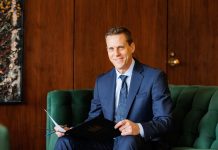





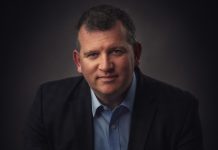

We sat down with Dr. Matt Strauss, Conservative Member of Parliament for Kitchener South—Hespeler, to discuss his successful campaign, priorities in office, and views on health care, public safety, and the challenges facing Canadians today.
From door to door, conversation to conversation, Dr. Matt Strauss says that campaigning felt a lot like practicing medicine — personal, exhausting, and deeply rewarding. “There are a thousand emotions every day, but overall fantastic experience. I’m a physician and in a day at the clinic, you knock on a door, you open the door, you see who’s in there, you see what their problems are and how you can help. That’s like 95 per cent of campaigning — knock on doors, see who’s in there, see how you can help them.” Walking the neighbourhoods where he lived as a child added a sense of home to the process. “I was walking around the neighbourhoods I grew up in and meeting my friends’ parents who I hadn’t seen in years and years. In some ways it was a very homey experience.”
Strauss credits the team-oriented nature of his campaign with helping him stay focused and effective. “There was zero drama on my campaign. Everyone knew what they were doing. They did it their hardest. And yeah, I feel overwhelming gratitude that it worked out that way.” Strauss also believes that connecting with voters required addressing the issues they cared about most. “If I hit on the things that they were worried about, that’s where we had a terrific conversation blossom out of that. Because I’m a physician, I would usually mention health care in the first 30 seconds. I would usually mention the deficit and inflation, affordability, housing. And what I found was that Trump and the tariffs were on everyone’s mind. And if I didn’t lead with that, folks would feel that disconnect.”
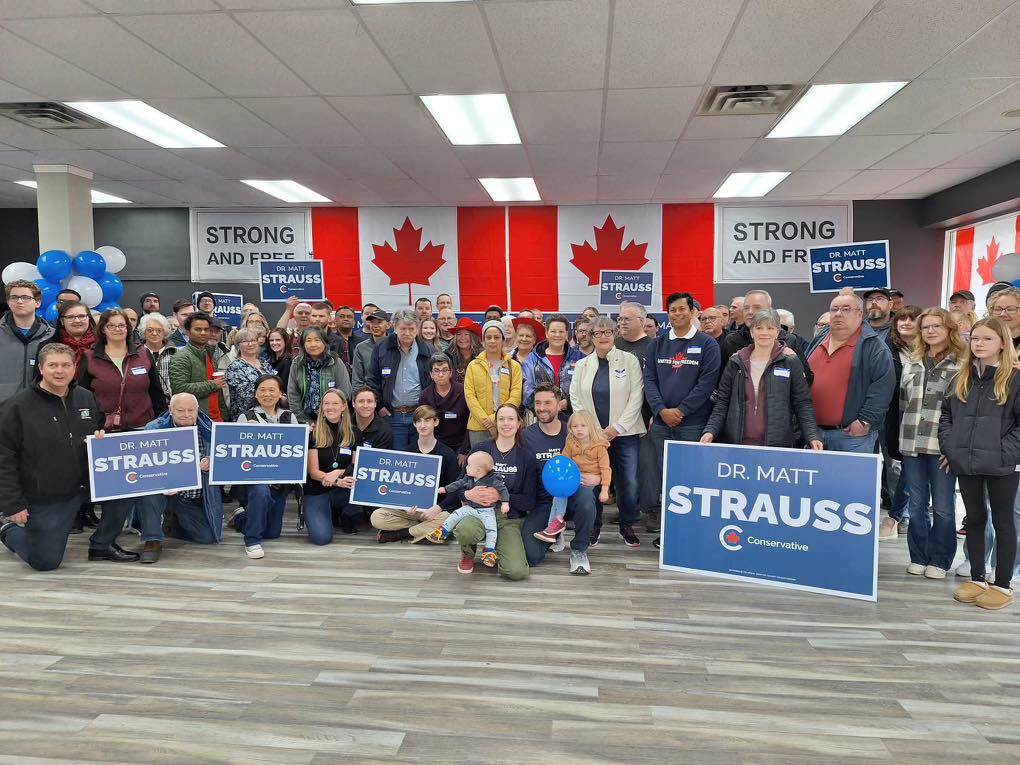
Reflecting on election night, he says the emotions were intense. “It was surreal. The overwhelming emotion was gratitude. It meant so much to have my neighbours put their faith in me. There was also a heavy sense of responsibility. I promised them change. Part of what made that heavy was eight-tenths gratitude, one-tenth heavy sense of responsibility, but it was one-tenth dismay that we had not won the national election because I promised change and we all thought we would be in government.”
That mix of gratitude and disappointment set the tone for what came next. Adjusting to life as a new MP, Strauss quickly discovered that Parliament “is an interesting institution with a lot of strange rules and no instruction manual.” The early days were filled with logistical hurdles — hiring staff, opening an office, and learning the complex rhythm of Ottawa.
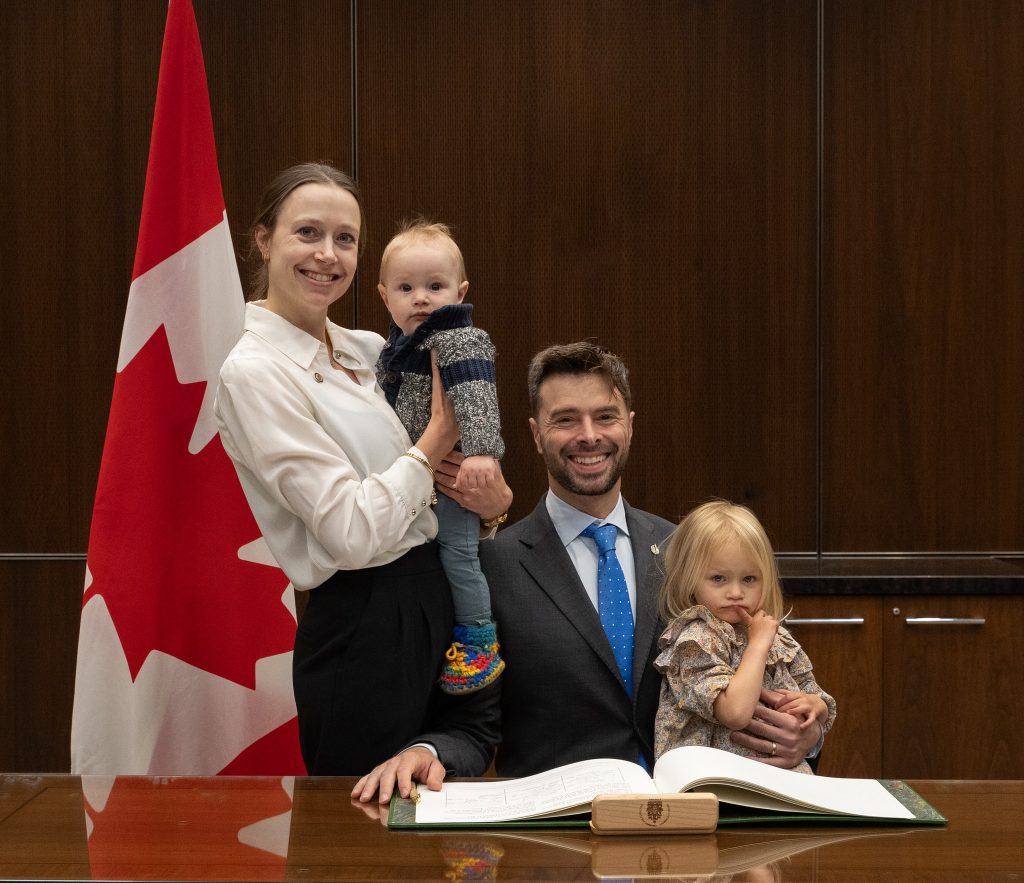
For Strauss, the transition came with an added challenge. The loss of Conservative MPs who he liked and respected as mentors and role models. “I had made connections with some other MPs in Ontario before I was elected… and three of them weren’t there when we got there,” he recalls. “It was disorienting because Michelle [Ferreri] and Ryan [Williams] were, in some ways, my model for what an opposition MP does and how they do it well. Similarly, another physician in the Conservative caucus, Stephen Ellis, who had been a fantastic mentor, wasn’t there either. Most importantly, Pierre [Poilievre] wasn’t there. I looked up to him as a model for how an opposition MP should operate. Not having him there made the transition challenging — I didn’t know how to approach the role, how to prioritize, or how to navigate the system.”
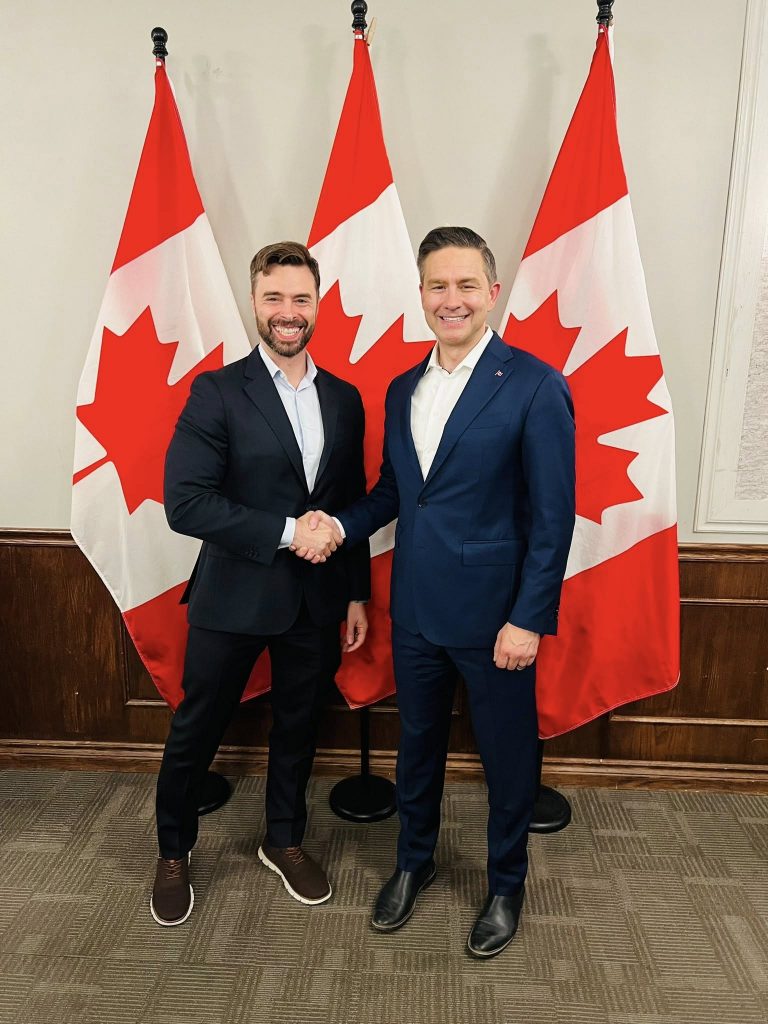
Despite the early uncertainty, Strauss found a collaborative spirit among neighbouring MPs and the newly elected Conservative caucus. “There’s such a wide variety of backgrounds and strengths,” he says. “The new MPs from Ontario became fantastic resources. Jacob Mantle, for example, is an international trade lawyer and someone I get to spend time with every day. That support has been invaluable in figuring out how to effectively serve my community while navigating the complexities of Parliament.”
Through that collaboration, Strauss says he began to see how opposition MPs can still make a real impact. “Although in a minority parliament, we don’t generally have the ability to write and pass our own legislation, all government legislation has to go to committee, and most of those committees are controlled by opposition MPs.”
“We have the opportunity to amend stuff,” he explains. A recent example came with Bill C‑5, which he calls “a terribly problematic bill in a lot of ways” that gave Prime Minister Mark Carney extraordinary powers to bypass conflict of interest laws. “We amended, we thoroughly amended that piece of legislation, made it much better,” he says. He also had the chance to give speeches on Bills C‑3, C‑8, and C‑9, helping to highlight problems and push for amendments at committee. “I wouldn’t be surprised if the Liberals or the Bloc agreed to some of the amendments I was proposing,” he adds.
Strauss’s medical background continues to shape his perspective, particularly on health care. “As an MP, you serve everybody — Conservative voters, Liberal voters, NDP voters, Green voters, People’s Party voters. Medicine is very similar; whoever comes through the door, they’re your patient. You fight for them,” he says. Sitting on the health committee, Strauss feels his experience allows him to “slice through” bureaucratic jargon and assess whether the correct services are being delivered. He emphasizes the need for Canada to learn from other countries’ health care systems: “I’m not married to any particular solution. We need to study what’s going on elsewhere and have the openness and as a polity to try something because what we’re doing right now is not working.”
Strauss is equally direct when it comes to crime and public safety. “Every civilization in human history has understood that, unfortunately, one to two per cent of people become broken, violent psychopaths — and that is terribly unfortunate.”
“They have to be put away. They have to be taken out of society where they cannot continue to prey upon the most vulnerable.”
“And it’s only the Liberal Party of Canada, to my knowledge, that thought, ‘How about we don’t do that?’ That’s what they’ve tried with C-5 and C-75 — these Liberal bail laws that release people again and again to commit property crime, to stab, et cetera.” Strauss frames the solution as one rooted in both justice and mercy.
Looking ahead, Strauss says his priorities are clear: “Expose, oppose, propose. Fundamentally, Liberals propose bad legislation; we need to change it for the good of the country. We also need to form government. We need to build out more propositions, more boldness, so people can see our agenda. We need to have the whole buffet out there so that they can’t accuse us of a hidden agenda.”
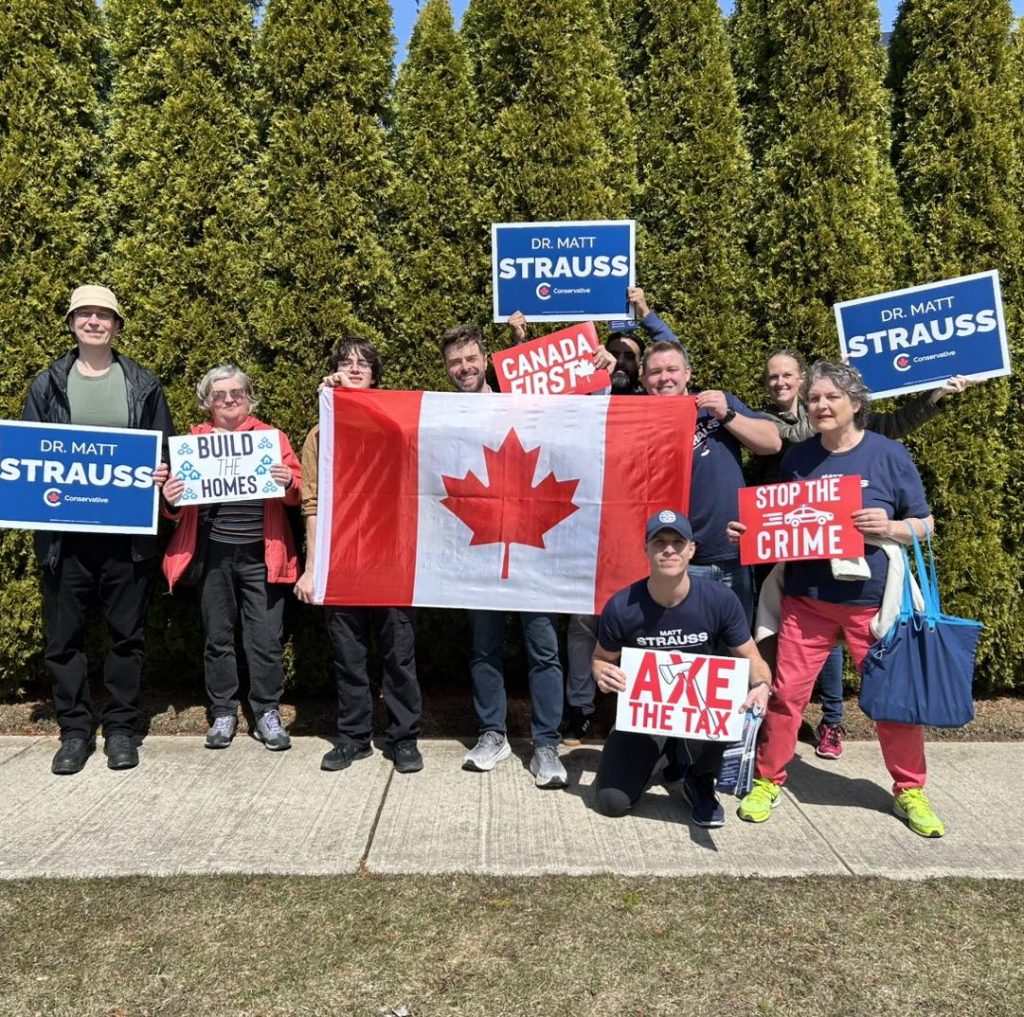

He concludes with gratitude for the trust of his constituents. “Extreme gratitude — part of what I’m grateful for is it’s rare in life to be totally 100 per cent engaged in work. And I’ve been that. It feels like what I’m doing is meaningful, it’s moving the needle. Because of what I’m working on, the laws of Canada will be different and better than if they hadn’t put me here. I’m never going to take it for granted. Thank you.”
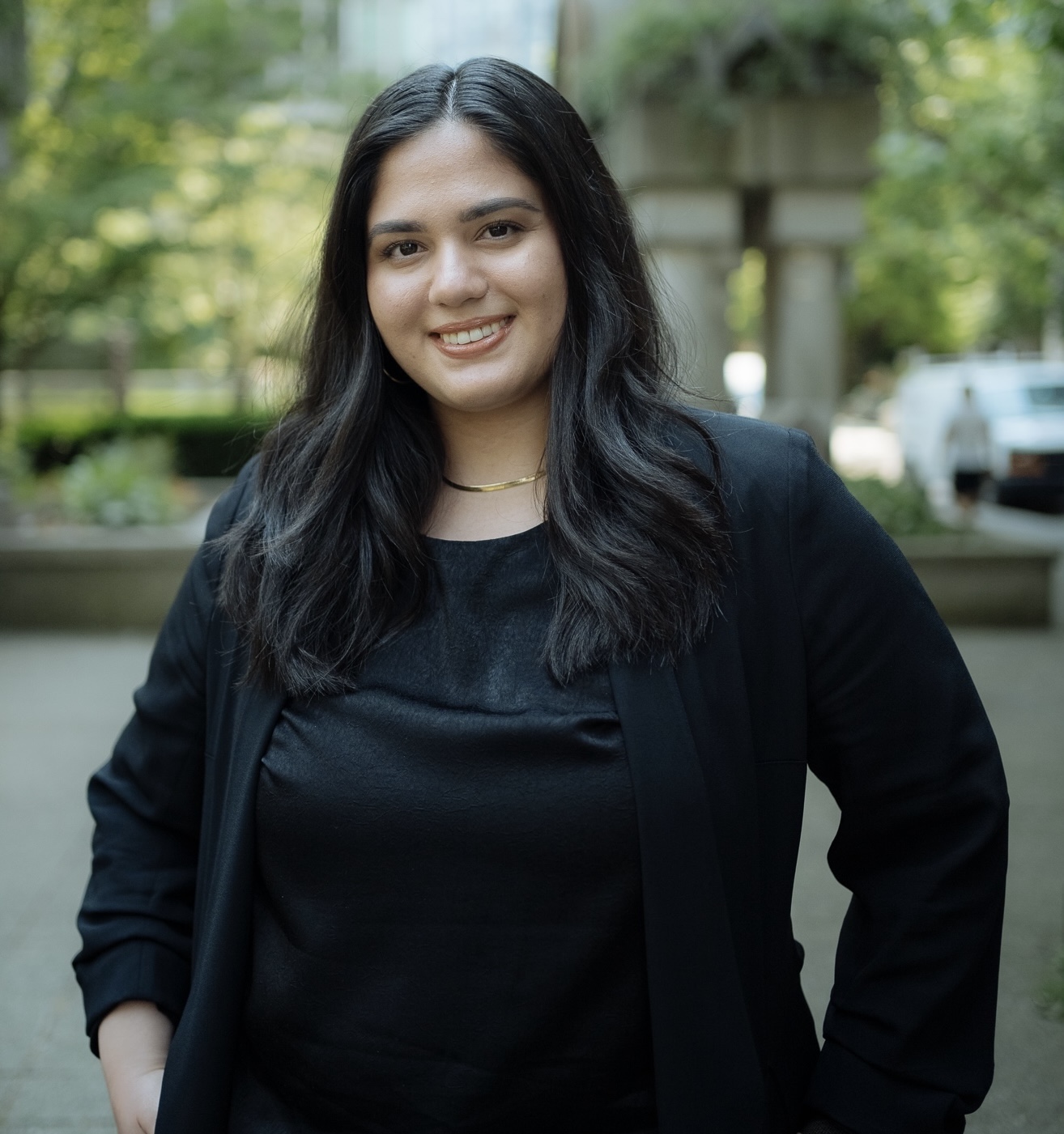
Leda Omid is a writer and communications professional with experience in journalism and political communications. She is a graduate of the British Columbia Institute of Technology’s Broadcast and Online Journalism program.